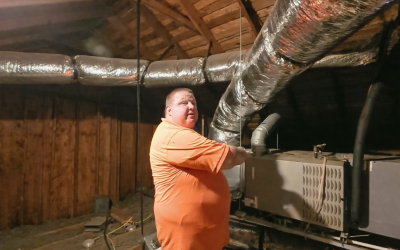
When we get called out to replace an old HVAC system, it’s always amazing to see just how long some of these units have been running. Recently, we pulled out a system from 1987 — that’s nearly 40 years old! While it had served its homeowners well, it was definitely time for an upgrade.
In this post, I’ll walk you through what goes into replacing a system like this, the risks of outdated setups, and a few tips you can use to keep your own system running longer.
Step 1: Removing the Old System
The first step is always disconnecting and removing the old unit. That means cutting out the copper line set (the piping that carries refrigerant between the indoor coil and outdoor unit). These old lines can get weak over time, especially if they were originally installed inside a concrete slab.
Why Line Sets in Slabs Are a Problem
In Oklahoma, we deal with earthquakes and shifting foundations. When that concrete moves, the copper lines crack — leading to refrigerant leaks. Fixing that can run $800 to $1,500, and that’s before recharging the system. That’s why we always recommend running new lines overhead, away from the slab.
Step 2: Checking the Plenum
Once the old coil is out, we inspect the plenum (the box that connects your HVAC system to the ductwork).
What Can Go Wrong with a Plenum?
In many Oklahoma homes, plenums are built directly into the slab. Over time, they can rust, leak, and even fill with sand and dirt. That debris ends up traveling into your home’s air supply.
In this case, the plenum was still in decent shape, but it was starting to separate at the seams. We sealed cracks, cleaned everything out, and built a solid base for the new system. A clean start means a longer-lasting install.
Step 3: Installing the New Unit
The replacement here was a 454 refrigerant system — a big step up from the 1980s technology.
Why the Right Fit Matters
The new unit was shorter in height, so we built a transition to make sure the airflow connected properly. Getting the base right is critical for efficiency and airflow.
Pro Tips for Homeowners
A big part of what we do is educating homeowners. Here are a few things you can do to keep your system healthy:
How Often Should You Really Change Filters?
Once a year is not enough. Aim for monthly changes if you have pets, kids, or live near construction. At minimum, every 3–4 months.
What’s the Best Way to Clean Your Outdoor Unit?
Lightly rinse your condenser coil from the inside out. Avoid high pressure — that can bend the fins.
Why Regular Maintenance Saves Money
Coil cleanings and blower motor pull-outs are expensive. Staying on top of filter changes and scheduling regular maintenance saves you money in the long run.
Why Maintenance Matters
At The Heat and Air Guy, we’ve upgraded our maintenance program to the new Comfort Shield Membership — designed to keep your system running longer and protect your home from unexpected breakdowns.
Here’s what Comfort Shield includes:
- 1 FREE service call (no trip charge)
- 20% off all repairs
- No overtime fees — same fair rate day or night
- $100 annual credit toward a future system replacement (up to $1,000 max)
- Priority scheduling so you’re never left waiting
- Seasonal tune-ups to keep your system efficient year-round
For many homeowners, these benefits mean fewer surprises, lower repair costs, and more peace of mind.
Final Thoughts
Replacing a nearly 40-year-old HVAC unit is no small job. From removing outdated copper lines to inspecting the plenum and installing a new system, there are a lot of details that go into making sure everything runs efficiently.
Whether your system is brand new or pushing a few decades, proper care is the difference between costly repairs and years of reliable comfort. If you’re looking for a way to stay ahead of issues and keep your system in top shape, the Comfort Shield Membership is one of the simplest, most effective steps you can take.
👉 Want to see this project in action? Watch the full installation on our YouTube channel.